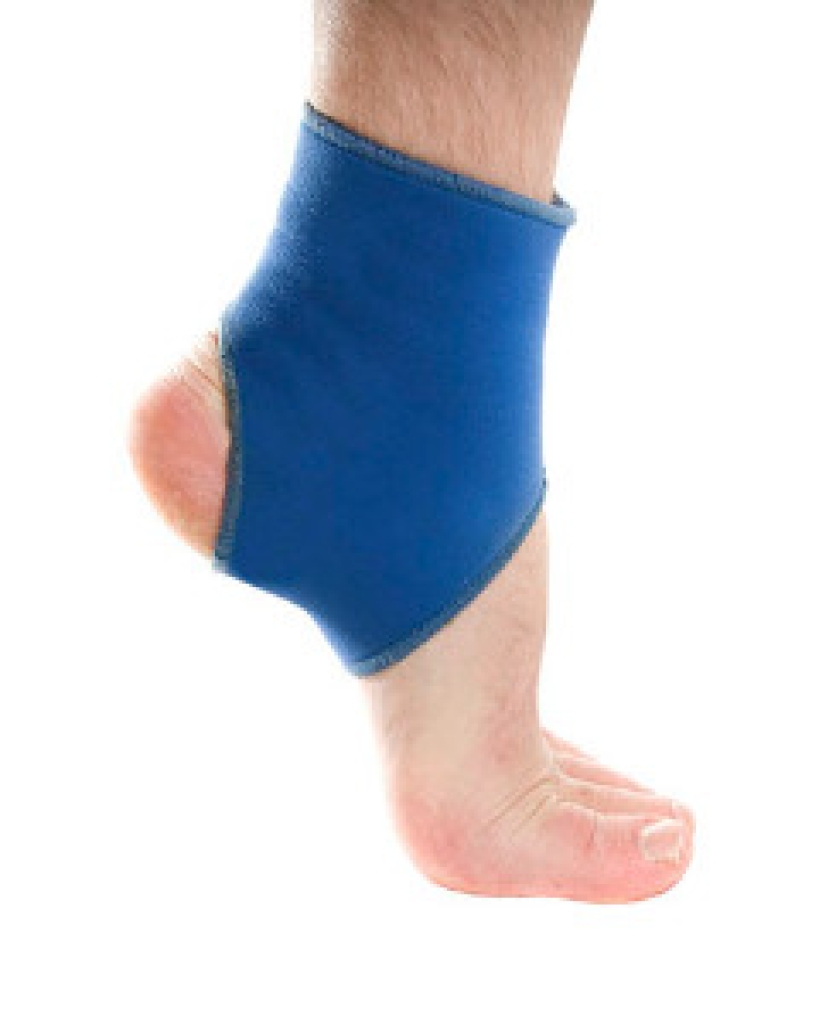
 Ankle sprains occur when the ligaments that bind and support the ankle joint become stretched beyond their limits. Having good balance as well as strength and flexibility in your feet, ankles, and lower legs can help prevent ankle sprains from occurring. Stretching your calf muscles before and after engaging in physical activity is important. From a standing position with your hands (at arm’s length) placed on a table or a wall, put one leg behind you. Keeping both heels on the ground, lean forward gently until you feel the stretch in your calf muscles. Hold for 15-30 seconds, then repeat the stretch with your other leg behind you. A podiatrist can provide additional stretching techniques and ankle strengthening exercises that can be applied in combination with other preventative measures to help you avoid a sprained ankle. These methods can also help to heal a sprained ankle should one occur.
Ankle sprains are common but need immediate attention. If you need your feet checked, contact one of our podiatrists from Gerber Podiatry Clinic. Our doctors can provide the care you need to keep you pain-free and on your feet.
How Does an Ankle Sprain Occur?
Ankle sprains take place when the ligaments in your ankle are torn or stretched beyond their limits. There are multiple ways that the ankle can become injured, including twisting or rolling over onto your ankle, putting undue stress on it, or causing trauma to the ankle itself.
What Are the Symptoms?
- Mild to moderate bruising
- Limited mobility
- Swelling
- Discoloration of the skin (depending on severity)
Preventing a Sprain
- Wearing appropriate shoes for the occasion
- Stretching before exercises and sports
- Knowing your limits
Treatment of a Sprain
Treatment of a sprain depends on the severity. Many times, people are told to rest and remain off their feet completely, while others are given an air cast. If the sprain is very severe, surgery may be required.
If you have suffered an ankle sprain previously, you may want to consider additional support such as a brace and regular exercises to strengthen the ankle.
If you have any questions please feel free to contact our office located in Evanston, IL . We offer the newest diagnostic tools and technology to treat your foot and ankle needs.

 Like US
 Follow Us
 Review Us